Corrective Jaw Surgery
Orthognathic surgery may be considered when the relationship between the jaws, teeth, and facial structures requires specialized evaluation. Planning begins with listening, comprehensive assessment, and close coordination with your dental and medical care team.
Key terms: Orthognathic Surgery · Bite · Temporomandibular Joint (TMJ) · Oral & Maxillofacial Surgeon
A Surgical Option Within a Larger Treatment Plan
Orthognathic surgery is a specialized area of oral and maxillofacial surgery considered when the position or relationship of the upper and lower jaws requires further assessment. The decision to explore surgery follows careful diagnosis, treatment planning, and—in many cases—coordination with orthodontic and restorative providers.

- A dentist or orthodontist has identified a jaw or bite relationship that may benefit from specialist evaluation
- Orthodontic care requires coordinated oral-surgery planning
- A patient has questions about jaw position, facial balance, or long-term dental function
- A provider has recommended a more comprehensive oral and maxillofacial evaluation
Referral for evaluation does not mean surgery is automatically recommended.
Key Focus Areas
- Jaw Relationship Evaluation
- Function & Oral Health Assessment
- Collaborative Orthodontic Planning
- Surgical Correction
- Long-Term Functional Monitoring
READY TO TAKE THE NEXT STEP?
Consultations available in Metro Detroit.
A Clearer Understanding Before Any Decision
Each step builds toward an individualized recommendation—not a template.
Conversation & History
Discuss concerns, goals, dental and medical history, and prior treatment.
Clinical Examination
Evaluate the bite, teeth, facial structures, and jaw relationship.
Diagnostic Review
Review records, orthodontic information, imaging, and determine if further diagnostics are needed.
Interdisciplinary Coordination
Communicate with orthodontists, dentists, and physicians when relevant.
Individualized Recommendation
Explain findings, options, sequencing, and the next appropriate step.
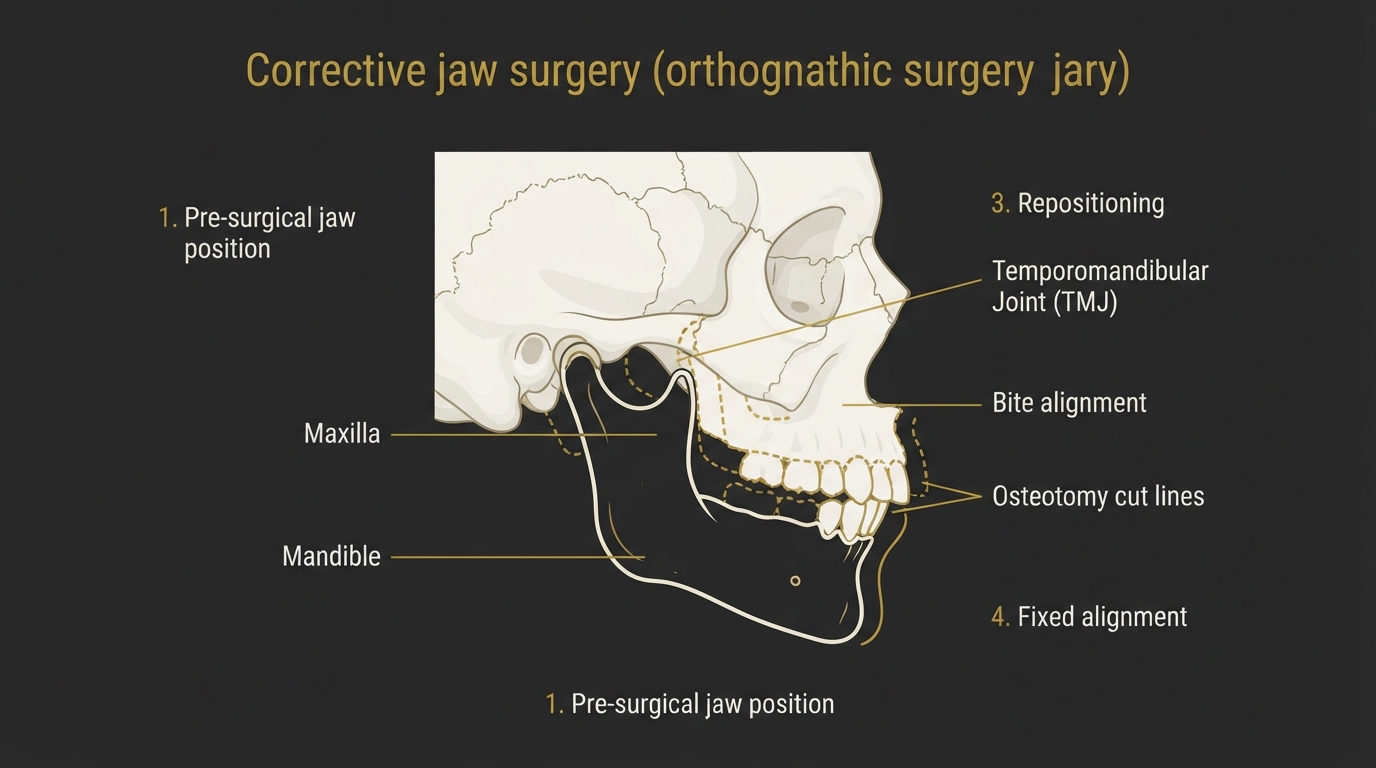
Illustration: Sequential stages of corrective jaw surgery — from pre-surgical jaw position through osteotomy planning, repositioning, and fixed alignment. Labeled structures include maxilla, mandible, temporomandibular joint (TMJ), osteotomy cut lines, and bite alignment. For educational purposes only; individual anatomy varies.
Jaw Surgery & Orthodontics
Coordinated, not interchangeable. Surgical and orthodontic goals remain aligned.
The Intent of Care
A considered experience through every phase.
Jaw Relationship
The relationship between the upper jaw, lower jaw, teeth, and bite is evaluated individually.
Function & Oral Health
Bite, chewing, joint symptoms, airway, or facial balance concerns require clinical assessment.
Collaborative Planning
Orthodontists, dentists, and other specialists may be part of the care conversation when appropriate.
Risks, Recovery & Continued Support
Orthognathic surgery is evaluated in the context of oral health, bite, jaw relationship, patient goals, and coordinated clinical planning. No recommendation should be based on appearance alone. The timing, details, and scope of care vary widely and should come directly from your surgical and orthodontic team. A phased recovery with ongoing coordination and follow-up.
Alternatives
Orthodontic treatment alone may be sufficient for some patients. The need, timing, and role of surgery vs. orthodontics are individualized.
When to Seek Care
If you have been referred for jaw-surgery evaluation or want to better understand a complex bite or jaw treatment path, a consultation can provide clarity.
Surgical Recovery
Recovery from jaw surgery is phased, beginning with initial healing and swelling management. Follow individualized post-operative instructions and scheduled follow-up recommendations.
View After-Surgery Guide →Ongoing Coordination
Follow-up care involves continued coordination with your orthodontist and dental team. The timing and scope of ongoing care vary by individual plan.
View Patient Resources →Specialized Care
Board-Certified Expertise
Orthognathic surgery requires a deep understanding of the complex relationship between the jaws, teeth, and facial structures. At Aria, our board-certified surgeons bring years of specialized training to your evaluation and treatment.
Meet the SurgeonsTaylor, Michigan
All evaluations and surgical procedures take place in our Taylor office, designed to provide a supportive environment for your care.
View Location & ContactCommon Questions
Answers to questions patients ask about corrective jaw surgery.
Still have questions? Schedule a consultation with our board-certified surgeons.
Request a ConsultationThis information is educational and is not a diagnosis or substitute for care from a qualified professional. Recommendations depend on an individual evaluation. If you believe you are experiencing a dental or medical emergency, please seek immediate care. View our Medical Disclaimer.

Expert care. Clear answers. Precise outcomes.
We're accepting new patients. A member of our team will contact you within one business day to confirm your appointment.
(734) 472-4214