Bone Grafting After Extraction
After a tooth is removed, the area begins to heal and change. In selected situations, Aria may discuss bone grafting as part of a broader treatment plan — particularly when future tooth replacement or implant planning is being considered.
The supporting bone and tissues around a tooth are part of the foundation for oral health and future restorative options. When a tooth is removed, Aria considers what the area may need next.
Why the extraction site matters
When a tooth is removed, Aria considers what the area may need next — not only the immediate extraction, but also the long-term treatment goals for that space. A regenerative procedure is considered case by case.
Healing
The extraction site needs time and appropriate follow-up after treatment.
Future Options
The long-term plan may include observation, a bridge, or implant planning.
Individual Anatomy
The condition of the bone and tissues varies from patient to patient.
When bone grafting may be discussed
- Future implant planning is being considered
- The condition of the extraction site warrants additional support
- The location of the tooth has specific anatomical considerations
- Existing conditions or treatment history influence planning
- Gum health, bite, or neighboring teeth are part of the larger picture
- Long-term restorative goals may benefit from site preservation
Not every patient needs a graft, and a graft is not a promise of any future treatment outcome.
Key Focus Areas
- Extraction Site Assessment
- Regenerative Considerations
- Diagnostic Imaging Review
- Treatment Options Discussion
- Restorative Coordination
- Follow-Up Planning
READY TO TAKE THE NEXT STEP?
Consultations available in Metro Detroit.
A Decision Made With the Full Picture in View
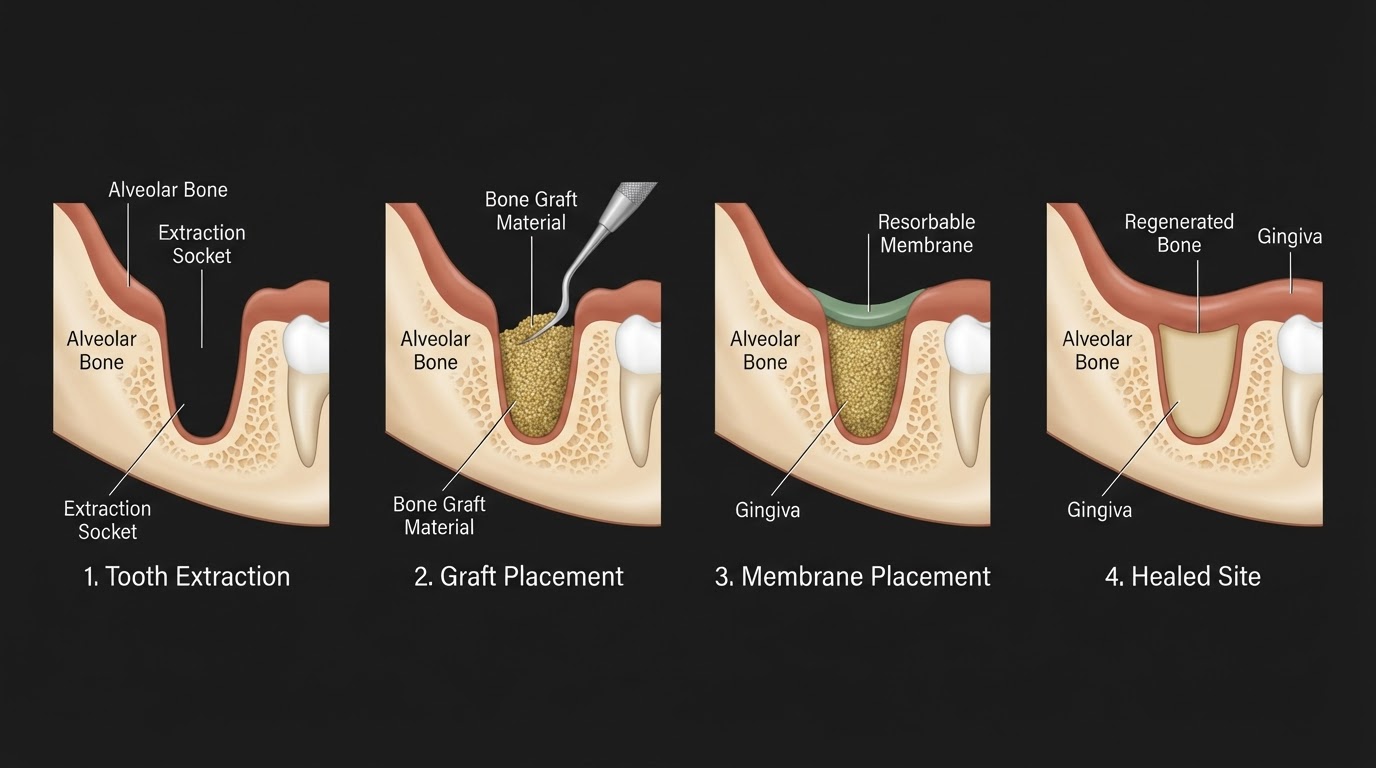
Illustration: Sequential stages of bone grafting after extraction — from socket preparation through graft placement, membrane coverage, and bone regeneration. Labeled structures include alveolar bone, extraction socket, bone graft material, resorbable membrane, regenerated bone, and gingiva. For educational purposes only; individual anatomy varies.
Understand Goals
Discuss concerns, restorative goals, and referral recommendations.
Evaluate Site
Review the tooth, surrounding tissues, bite, and oral-health history.
Review Diagnostics
Consider available imaging and determine if further records are needed.
Explain Options
Discuss extraction, regenerative considerations, alternatives, and next steps.
Coordinate Care
When appropriate, coordinate with your restorative dentist for future planning.
Understand Goals
Discuss concerns, restorative goals, and referral recommendations.
Evaluate Site
Review the tooth, surrounding tissues, bite, and oral-health history.
Review Diagnostics
Consider available imaging and determine if further records are needed.
Explain Options
Discuss extraction, regenerative considerations, alternatives, and next steps.
Coordinate Care
When appropriate, coordinate with your restorative dentist for future planning.
Planning for an Implant
For patients considering dental implants, the condition of the extraction site can be an important part of long-term planning.
A Supportive Step, Not a Standalone Promise
When grafting is recommended, it is considered as one part of a larger clinical plan.
Extraction & Site Assessment
The area is evaluated as part of the surgical plan.
Regenerative Consideration
Grafting may be discussed if clinically appropriate for the site and treatment goals.
Future Restorative Planning
After follow-up, Aria may coordinate with your dentist about restoration or implant options.
Risks, Recovery & Healing
When grafting is recommended, it is considered as one part of a larger clinical plan. As with any surgical procedure, risks may include swelling, infection, or delayed healing. These are discussed thoroughly during your consultation. Recovery varies based on the procedure performed and individual healing.
Alternatives
Not every extraction site requires grafting. Monitoring or delayed treatment may be appropriate depending on individual findings.
When to Seek Care
Contact our office if you experience excessive swelling, persistent bleeding, or signs of infection after your procedure.
Initial Healing
Focus on rest, soft foods, and following immediate post-op care instructions. Swelling typically peaks during the first week.
View Post-Op Guide →Integration Period
The graft site requires time to heal and integrate with surrounding bone. Follow-up visits ensure progress.
View Care Guide →Expert Surgical Care
Board-Certified Specialists
Bone grafting procedures at Aria are performed by our board-certified oral and maxillofacial surgeons, ensuring the highest standard of clinical expertise and patient safety.
Meet the SurgeonsTaylor, Michigan
Conveniently located in Taylor, serving patients throughout the Downriver community with a modern surgical environment.
View Location & ContactCommon Questions
Answers to questions patients ask about bone grafting after extraction.
Still have questions? Schedule a consultation with our board-certified surgeons.
Request a ConsultationRelated Services & Resources
Tooth Extractions
Comprehensive extraction evaluation.
Learn More →Regenerative Care
Healing enhancement and site preservation.
Learn More →Dental Implants
Explore tooth replacement options.
Learn More →Am I a Candidate?
Individualized implant evaluation.
Learn More →After Surgery
Post-operative care guidance.
Learn More →Anesthesia Options
Sedation choices for comfort.
Learn More →Prepared by ARIA Oral Surgeons
Medically reviewed by [SURGEON NAME], Oral & Maxillofacial Surgery
Last reviewed: November 2023
This information is educational and not a diagnosis or substitute for professional care. If you believe you are experiencing a dental or medical emergency, seek immediate care. View our Medical Disclaimer.

Expert care. Clear answers. Precise outcomes.
We're accepting new patients. A member of our team will contact you within one business day to confirm your appointment.
(734) 472-4214