The ARIA Difference: How 3D Imaging & Guided Surgery Technology Transform Oral Surgery Outcomes
ARIA Medical Editorial Team
Reviewed by Dr. Bilal Ibrahim, DDS
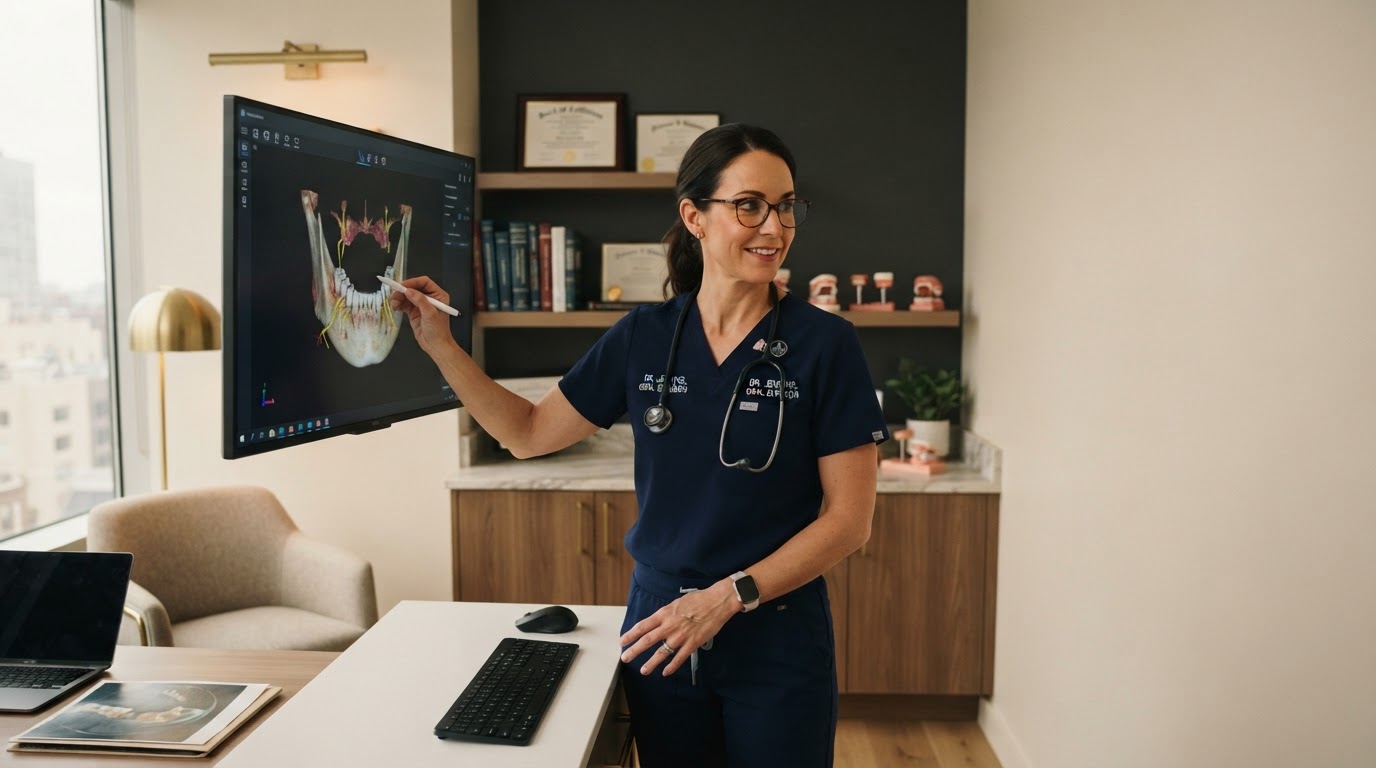
Two decades ago, oral surgeons planned procedures using two-dimensional X-rays and physical models. Today, we can visualize a patient's entire craniofacial anatomy in three dimensions, simulate surgical outcomes before making a single incision, and guide implants with sub-millimeter accuracy. This is the technology gap that defines modern oral surgery — and it's where ARIA Oral Surgeons invests heavily.
For patients in Metro Detroit, this technological investment translates directly into tangible benefits: safer procedures, more predictable outcomes, reduced surgical time, and faster recovery. In this article, we explore the specific technologies ARIA uses and why they matter for your care.
3D Cone Beam Computed Tomography (CBCT) Imaging
Traditional dental X-rays provide a flat, two-dimensional view of teeth and bone. While useful for basic diagnostics, they cannot reveal the three-dimensional relationships between teeth, nerves, blood vessels, sinuses, and bone density — information that is critical for safe surgical planning.
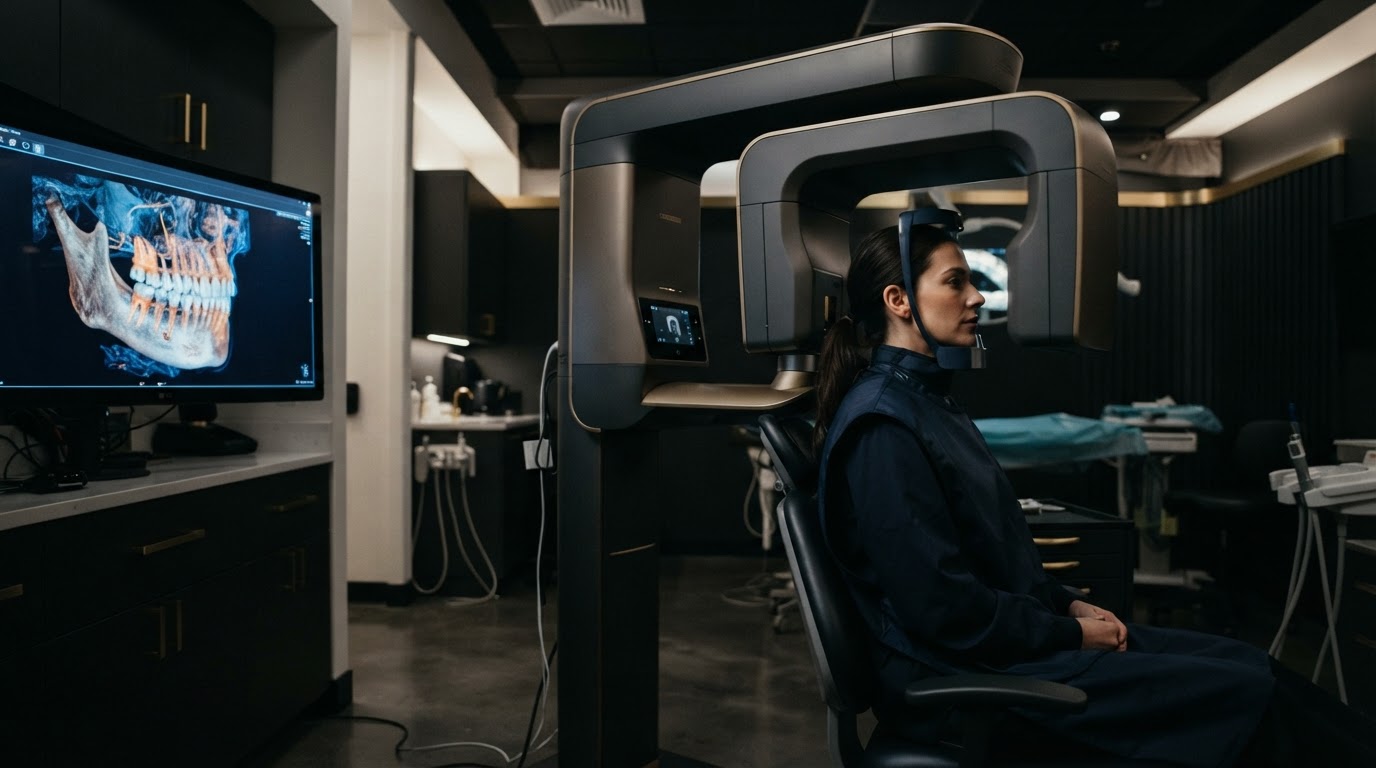
Cone beam CT (CBCT) imaging solves this problem. By rotating around the patient's head and capturing hundreds of images, CBCT technology reconstructs a complete three-dimensional model of the patient's oral and maxillofacial anatomy. At ARIA, we use CBCT imaging for:
- Dental implant planning — mapping bone density, width, and height to determine optimal implant position and whether bone grafting is needed
- Wisdom teeth evaluation — visualizing the exact relationship between impacted teeth and the inferior alveolar nerve to assess extraction risk
- Sinus lift planning — measuring the distance from the jawbone to the sinus floor for safe graft placement
- TMJ assessment — examining the temporomandibular joint in three dimensions for accurate diagnosis of dysfunction
- Oral pathology — characterizing the size, shape, and extent of cysts, lesions, and abnormalities
- Facial trauma — identifying fractures and their precise orientation for surgical repair planning
- Orthognathic surgery — analyzing skeletal discrepancies in three dimensions for corrective jaw surgery planning
A CBCT scan takes less than a minute to capture but provides the surgical roadmap that can mean the difference between a routine procedure and a complication. It is one of the most important investments a modern oral surgery practice can make.
Computer-Guided Implant Surgery
Dental implant placement is as much an engineering challenge as a surgical one. The implant must be positioned at the correct angle, depth, and location to support a natural-looking crown while avoiding critical anatomical structures like nerves and sinuses. Even a few degrees of deviation can compromise the long-term success of the implant.
Computer-guided implant surgery bridges the gap between planning and execution. Here's how the process works at ARIA:
- 01.
CBCT scan: We capture a 3D image of your jaw, capturing bone density and anatomical structures.
- 02.
Digital planning: Using specialized software, your surgeon maps the ideal position, angle, and depth for each implant on the 3D model — accounting for the final restoration's requirements.
- 03.
Surgical guide fabrication: A custom surgical guide is created based on the digital plan. This guide fits precisely over your teeth or gums and directs the implant drill to the exact planned position.
- 04.
Guided placement: During surgery, the guide ensures the implant is placed exactly as planned — eliminating guesswork and dramatically reducing surgical time.
The result is implant placement that is more accurate, more predictable, and less invasive than freehand techniques. For patients, this typically means smaller incisions, less post-operative discomfort, and a higher long-term success rate.
Immediate Placement and Provisionalization
When conditions allow — sufficient bone density, healthy gums, and primary implant stability — guided surgery enables immediate implant placement at the time of tooth extraction. In some cases, a temporary crown can even be attached the same day. This approach, known as immediate placement and provisionalization, reduces the total treatment timeline and preserves gum and bone tissue that would otherwise resorb after extraction.
Not every patient is a candidate for immediate placement. Factors like active infection, insufficient bone, or heavy bite forces in the area may require a more traditional staged approach. Your surgeon will assess your specific situation during consultation and recommend the safest, most effective path.
"Technology doesn't replace surgical judgment — it enhances it. The CBCT scan tells us what's there; the guided plan tells us where to go; but the surgeon's experience determines whether the plan is right for this specific patient."
Digital Records and Imaging Integration
Beyond the surgical suite, ARIA's technology infrastructure supports better coordination of your care. Digital records and imaging can be securely shared with your referring dentist or physician, ensuring everyone involved in your treatment has access to the same diagnostic information. This is particularly valuable for multi-disciplinary cases involving orthodontics, restorative dentistry, or medical specialists.
For referring dentists, this means seamless collaboration on complex implant and restorative cases. For patients, it means fewer duplicate scans, faster communication between providers, and a more coordinated treatment experience.
Regenerative Technology: Bone Grafting & Sinus Lifts
Technology also plays a crucial role in regenerative procedures. When bone has been lost due to tooth extraction, periodontal disease, or trauma, 3D imaging allows us to precisely measure the deficit and plan the grafting procedure accordingly. Whether it's socket preservation after extraction, sinus lift surgery to augment the posterior maxilla, or block grafting for significant defects, CBCT-guided planning ensures the graft is placed exactly where it's needed to support future implants.
Modern bone grafting materials — including autogenous grafts (your own bone), allografts (donor bone), and synthetic options — combined with barrier membranes and growth factors, give us more tools than ever to rebuild deficient jaws. The key is matching the right material and technique to each patient's specific anatomical needs, which is where 3D imaging becomes indispensable.
Why Technology Matters for Patient Safety
Ultimately, the most important benefit of surgical technology is safety. When your surgeon can see exactly where nerves, blood vessels, and sinuses are located before surgery begins, the risk of inadvertent injury drops dramatically. When implants are placed with guided precision, the risk of nerve damage, sinus perforation, or implant failure is minimized. When bone grafts are planned with 3D accuracy, the regenerative outcome is more predictable.
This is why ARIA continues to invest in diagnostic and surgical technology. It's not about having the newest equipment — it's about providing the safest, most precise, and most predictable surgical care possible for every patient who walks through our doors.
Common Questions About Oral Surgery at ARIA
This article was medically reviewed by ARIA's board-certified surgeons and follows our editorial policy and medical review policy. Last updated: 2026-09-14.